

Sharpen your data skills – a part-time update, built around your job.
University Certificate
Data Science
Build the AI and data skills that matter on the job – coding, analysis, at your level.

Free Spots
6
Target Group
Working Professionals from all industries, Software & IT specialists (e.g., Developer, Data Engineer), Data Analysts, Business Analysts, Controllers, Consultants and product roles & Academics with a Master's or PhD
Deadlines
Application Deadline: September 15, 2026
Program Start: November 23, 2026
Study Fee
7.450 €
Concepts & Modules
The certificate program “Data Science” is aimed at professionals in the field of data analysis, computer science and statistics as well as professionals from all industries and fields in which large amounts of data are generated and are either already used or should be used. The program offers the opportunity to acquire and deepen practice-relevant knowledge and skills in the field of Data Science.The program consists of a total of four modules of the English-language, part-time master’s program “Data Science”, which is a cooperation between the University of Münster and the University of Twente (Netherlands). Participants can choose to combine the modules according to their individual preferences.The first basic module, “Introduction to Data Science and Programming Systems”, comprises seven days of attendance in Münster.
The other two modules of choice selected from the Master’s program have five attendance days each in Münster or Enschede. The fourth module consists of writing a project work and holding a presentation. Participants acquire a total of 32 ECTS credits in the program. The standard period of study is approximately 18 months, including the final examinations. In case of a subsequent entry into the Master’s program “Data Science”, crediting of the completed modules is possible. Profiles from all industries are welcome – prospective students should have a basic understanding of programming, statistics and mathematics.
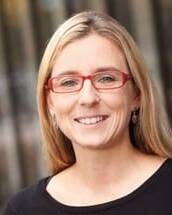
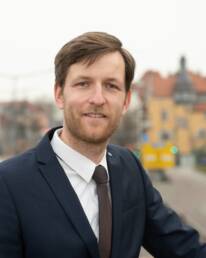
Lecturers & Scientific Management



Secure your place today
Find out more about your Master
Contact us for a personalised consultation
Find out what qualifications are required
Dates und Facts
Degree
University Certificate
Credit points
32 ECTS
Department
School of Business and Economics
Duration
approx. 12-14 months (depending on module choice)
Start Date
November 23, 2026 (first on-site module)
Application Deadline
September 15, 2026
Language of Instruction
English
Location(s) of Instruction
Münster, Germany | Enschede, Netherlands
Participation Fee
- by arrangement as an individual payment plan
- exempt from VAT pursuant to § 4 No.21 a (bb) UStG
Target Audience
The Data Science Certificate is designed for professionals from all industries and fields who want to build practical, hands-on data skills – from a first step into Data Science to a targeted upskilling for those with an already advanced academic background, such as a Master’s or PhD. This includes professionals from:
- Software development and IT (e.g., Software Engineer, Developer, DevOps Engineer, Data Engineer) looking to add hands-on Data Engineering, MLOps, or Machine Learning skills to their existing role
- Data analysis, statistics, and computer science (e.g., Data Analyst, Data Scientist, BI/Analytics Engineer) who want to deepen and structure their practical expertise
- Business analytics and controlling (e.g., Controller, Business Analyst) moving from classic reporting into hands-on, data-driven work
- Consulting (e.g., Consultant), building practical data skills to strengthen data-based client work
- Finance and banking, upskilling in data analysis and AI-driven processes
- Healthcare, applying data analysis skills to diagnostics and process management
- Industry, manufacturing, and engineering (e.g., Cloud Engineer, Site Reliability Engineer), adding data skills for process optimization and quality assurance
- Natural sciences and research, gaining hands-on skills in modern data analysis
- Product management and sales (e.g., Product Manager, Product Owner, Key Account Manager, Customer Success Manager), applying AI tools and data analysis directly in day-to-day work
Admission Requierments
- Completion of a first academic degree
- Professional working experience of at least one year
- Evidence of English language proficiency at level B2 (TOEFL, IELTS, etc.)
Free spots
6
Do you want to obtain a master's degree?
Integrate AI Excellence: Explore Big Data’s Potential with Our Part-Time Program and Elevate Your Career in the Tech World
More Topics

Your time in Münster
A fifth of Münster's 300,000 inhabitants are students at one of its eight universities, of which the University of Münster is by far the largest. Students shape life and culture in Münster, creating a diverse and vibrant city.

In Cooperation with the University of Twente
"The University of Twente is a smart living lab where talented students and stuff provide groundbreaking research, exiting innovations and inspiring education."
Therefore we are happy to have Twente as a strong educational partner.

Data Science (M.Sc.)
On the one hand, digitalisation facilitates numerous processes and opens up design possibilities that would not have been conceivable until recently; on the other hand, companies and institutions are thus faced with new challenges brought about by digitalisation and the volumes of data that accompany it.

We are happy to help you with your questions
Jannis Wegmann
Student advice and support
Mo–Fr: 9.00 am - 4.00 pm


