Save the date: Graduation Film Screening at Schloßtheater Münster
Save the date: Monday, 23 February 7:00 pm at Schloßtheater Münster.
We will be showing the following four films:
Atiruj Jerddeesakul: The Ritualist (2025)
Synopsis: A young anthropologist begins a quiet journey into the world of sak yant, tracing the gestures, stories, and beliefs that surround its practice. He moves through unfamiliar spaces, observing moments that feel both ordinary and strangely charged, trying to record meanings that shift each time he looks closer. His notes offer glimpses rather than answers, yet the uncertainty only draws him further in.
As the journey deepens, he starts to sense that understanding sak yant may not come from explanation alone, but from allowing himself to be absorbed—awkwardly, hesitantly—into a world that reveals itself slowly.
Himerria Wortham: Endless Echoes Within
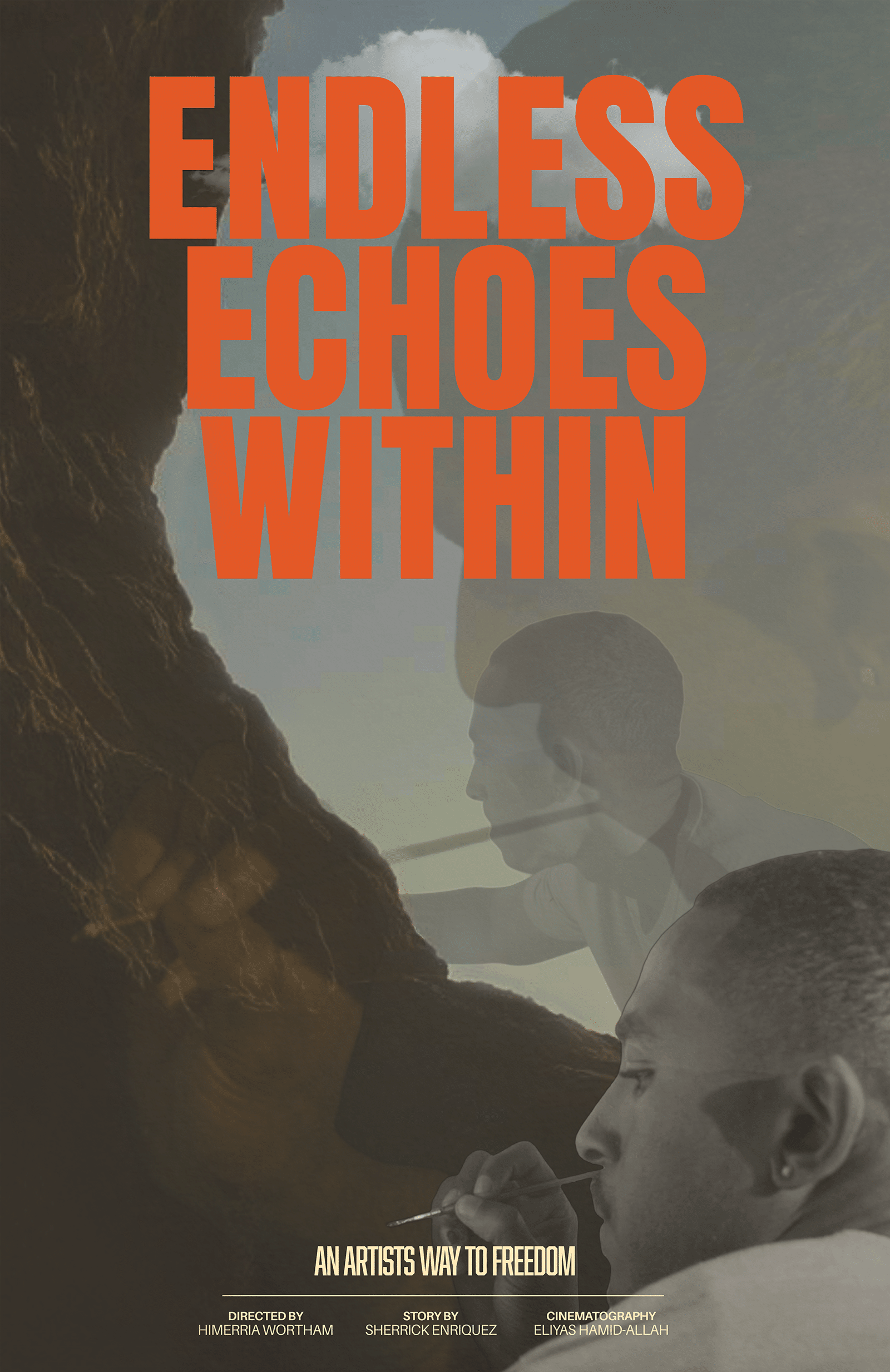
Synopsis: Endless Echoes Within” is an experimental collaborative ethnographic short film that follows visual artist Sherrick Enriquez as he reclaims and expands his creative voice in the aftermath of incarceration. Emerging from a 12‑week movement and film laboratory, the work traces a radical creative metamorphosis in which improvisation, site-specific performance, and collaborative filmmaking become tools for self-discovery during the uncertain, liminal space of reentry. Working with dancer‑filmmaker Himerria Wortham and Sherrick’s childhood friend and filmmaker Eliyas Hamid‑Allah, the film stages a physical exploration of memory that gradually unfolds into a meditation on freedom, control, and the lingering architectures of captivity. Through evocative visualizations of Sherrick’s inner world, and the subtle, unspoken intimacy between the three collaborators, “Endless Echoes Within” reveals how the act of reconstructing one’s life story—often shaped passively by institutions—can become an active, imaginative practice of reworking the self in dialogue with others, and a vital strategy for sustaining agency under disempowering conditions.
Merel Raats: The Uncapturables – A Gender Non-Reveal Party
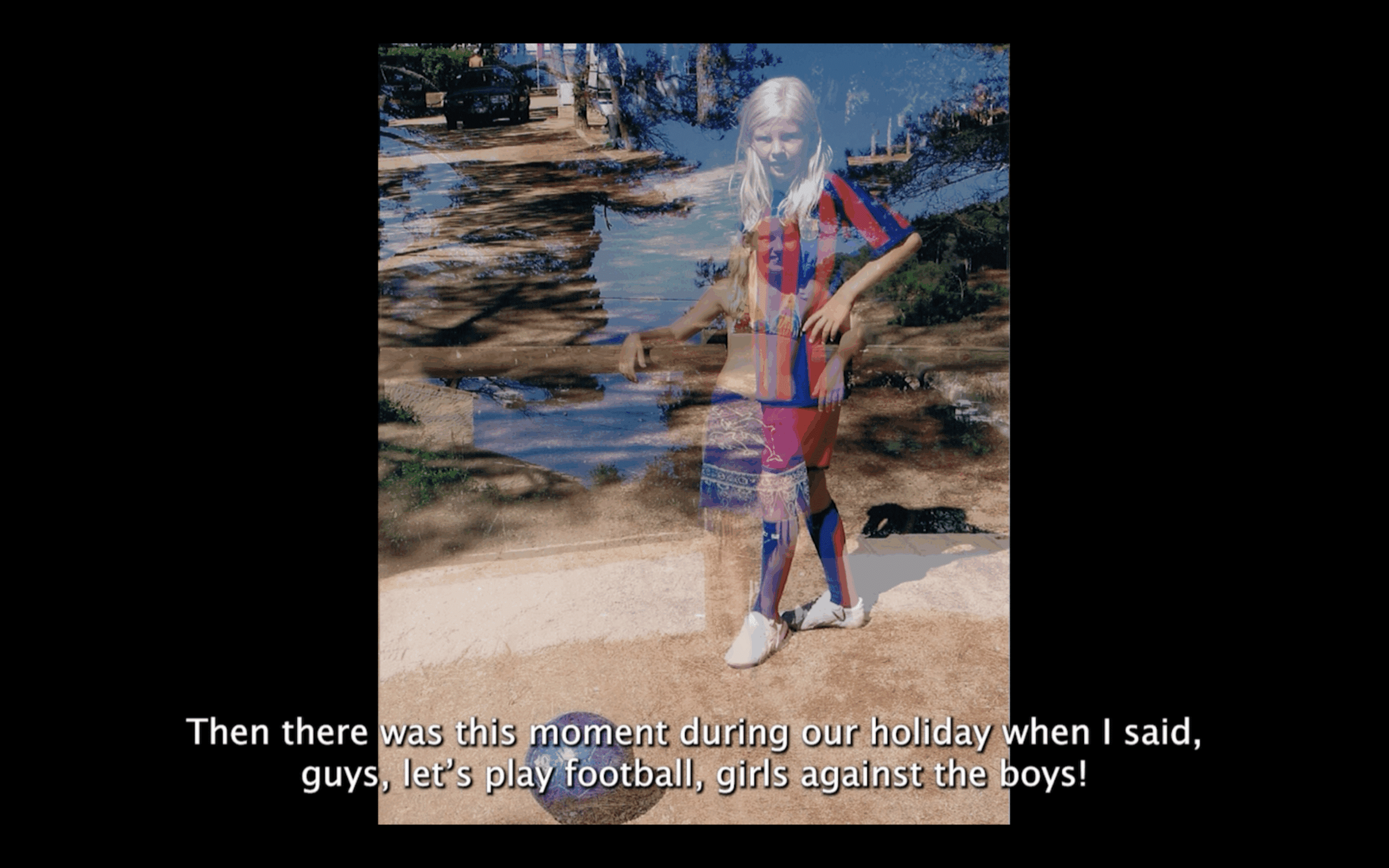
Synopsis: This short experimental ethnography examines how gender is culturally celebrated by dissecting gender-reveal rituals in the Netherlands. Composed of found footage and home videos of nuclear families during gender-reveal parties, childbirth, and birthdays, the film critiques the commodification and mediation of gender. Rather than revealing gender, it withholds legibility, foregrounding the feeling body of the enby through haptic listening. Through sonic juxtapositions and ‘’poor’’ images, the film attends to how acts of gendering begin before birth and echo across childhood, affecting trans and non-binary lives. An auditory sensibility structures the film’s editing, treating celebratory media representations of fetuses not as revelations but as rituals to be listened through. It asks: what does witnessing these habits of revealing gender do for those who do not find themselves within a cisgender binary? Refusing closure, the film resonates as an abolitionary practice of listening toward birthing gender otherwise.
Geetanjali Gurlhosur: A Shadow of a Woman
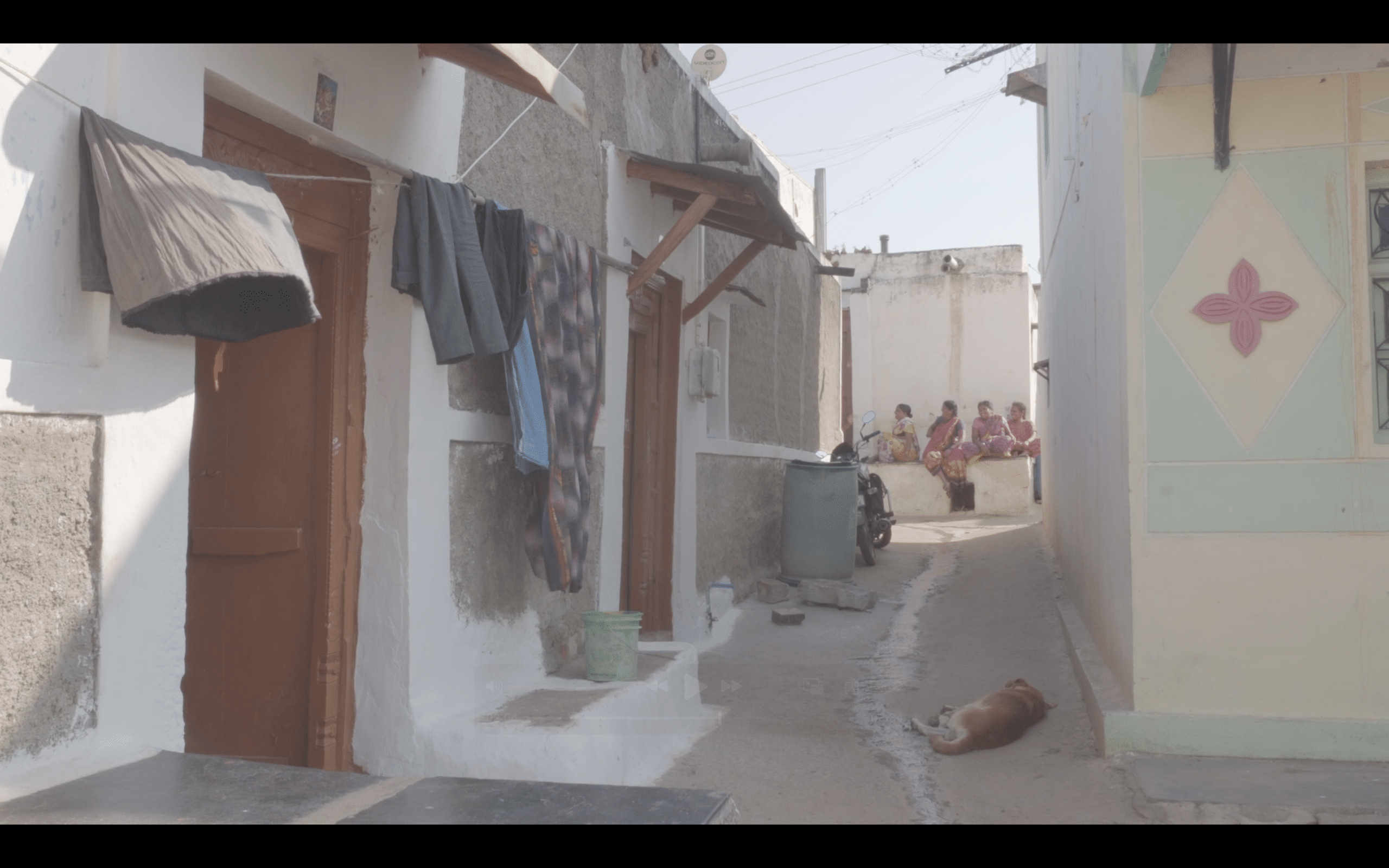
Synopsis: When she realises that her father’s mother (Amma) has been completely absent from the family archive and that her father knows nothing about his mother, the filmmaker sets out on a quest to find and connect with an ancestor who died half a century ago. With just a name and a blurry photograph developed in the 1970s, the filmmaker and her family search for their ancestor in memories and records, tracing her life across villages of south India. With as murky a character as memory though, will its investigation even lead to the past, or will it change the present?