

Trailer
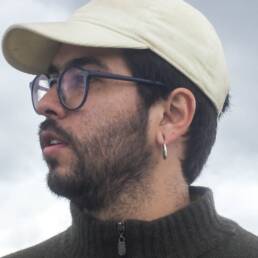
Juan Sebastián Pérez, Graduate
| Name | Juan Sebastián Pérez |
| Country | Colombia |
| Current Activities | I currently work for a music label and as an archivist at Ai Weiwei Studio in Berlin. I am also developing my own project, Cordillera Films, the production collective behind Geographies of Home, my Master’s film. At the moment, I am focused on the film’s distribution. |
Sociologist and visual anthropologist from Colombia, based in Germany. Interested in experimental filmmaking, documentary practices and music related production. His work involves DIY perspectives, collaborative methods and grassroot collectives fields. His topcis are related with human condition, existential contemplation, social engagement and political stands.
Why did you choose the Master’s program?
I wanted to bring together two of my main interests: the social sciences and film production, particularly in the documentary field. The program appealed to me because it opens up an in-between space of creativity, one that combines a deep understanding of reality with a metaphorical and cinematic point of view.
What did you like most about your studies?
What I valued most was the experience and knowledge of the team and the professors. They brought a high level of expertise, and their guidance pushed me to think more critically about my own work. We were constantly exposed to an excellent range of film references, from classic documentary traditions to more experimental approaches. This broadened my understanding of what the documentary form can be and helped me develop my own voice as a filmmaker. That foundation shaped Geographies of Home and continues to inform my work today.
What experiences/courses/projects during your studies do you think will help you the most in your professional life
Three things stand out. Module 3, Film Production, was a turning point for me. It was demanding, but it taught me how to move a project from idea to finished film, and I still rely on that process today. Module 6 gave me a clear and practical view of how the film industry actually works, which is knowledge that is hard to gain outside of a program like this. Finally, the ethnographic approach changed the way I look at the world. It gave me a lens for observing reality with more attention and depth, and it shapes how I work in every professional context.