Save the date: Graduation Film Screening at Studiobühne Münster
Save the date: Monday, 26 November 06:00 pm at Studiobühne Münster.
We will be showing the following films:
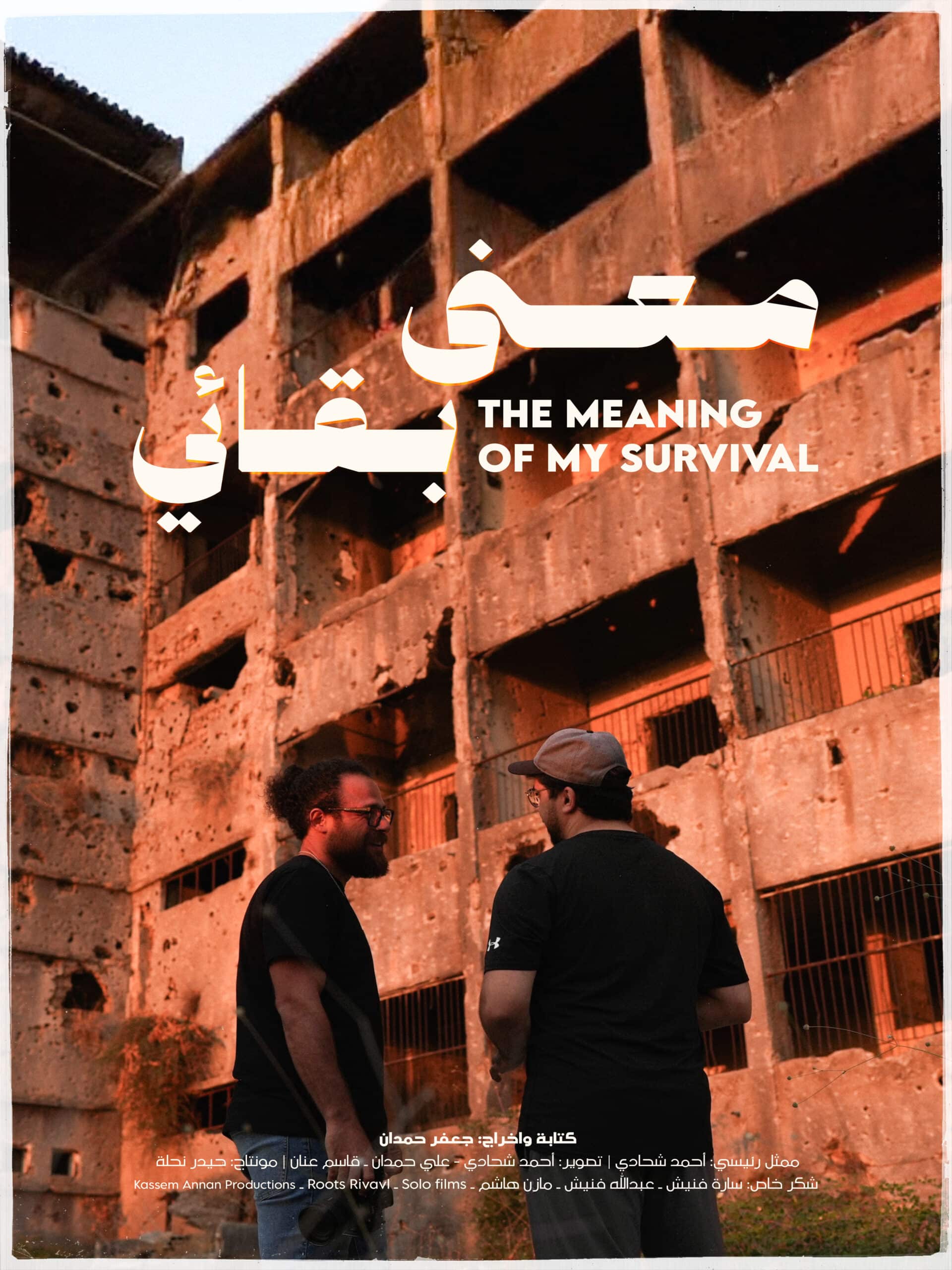
Jaafar Hamdan: The Meaning of my survival
Synopsis: This documentary is a sensory and political meditation on survival, resilience, and the act of witnessing during wartime. Set against the backdrop of the 2024 war in Lebanon, the film follows Ahmad, a Palestinian documentary filmmaker -living in Lebanon- who risked his life to document his community’s daily existence under bombardment. Through an intimate interview conducted by a fellow filmmaker, Ahmad reflects on his footage, his motivations, and the profound question that emerged from his experience: What does it mean to survive when survival itself is an act of defiance?
The film is situated within the ethnographic documentary tradition, incorporating sensory methodologies inspired by Sarah Pink’s work on embodied knowledge and Veena Das’s conceptualization of “the ordinary” as a site of violence and survival. The result is an autoethnographic inquiry that positions the filmmaker not as an objective observer, but as a member of a community engaged in the collective project of preserving its own memory.
Ultimately, معنى بقائي is a manifesto on resilience. It asks: What does it mean to remain? The answer, offered through Ahmad’s lens, is that survival is not passive—it is a continuous, courageous act of bearing witness to one’s own existence, and refusing to be silenced by the narratives of empire.
Phalgunn Maharishi: A German Stage for Indian Gods
Synopsis: There is nothing natural about a sixteenth-century coastal Indian temple ritual unfolding inside a quiet German theater. But for the members of Yakshamitraru, donning the heavy, vibrant costumes of Yakshagana is a vital act of cultural survival. Thousands of kilometers from home, this grueling second life becomes their way to connect through shared memory, finding belonging in a country that does not know their stories.
The film follows this dedicated group as they perform ancient Hindu epics in environments that starkly contrast the lively, open-air temple grounds of their homeland. On these foreign stages, traditional live musicians are replaced by a laptop, and 30-kilo costumes must be meticulously transported across European borders. By contrasting the rich, saturated colors of their intricate face paint and theatrical attire against the muted backdrop of their everyday expatriate lives, the ethnographic film highlights how these modern adaptations inevitably alter the improvisational soul of the artform. Its central tension lies in this delicate balance between preservation and evolution.
The ‘real’ story happens in the hours before the curtain rises. It is found in the heavy lifting of suitcases, the silence of the green room, and the technical frustration with a laptop. Embracing an ‘anti-climax’ approach, the film focuses intimately on these behind-the-scenes moments, revealing the emotional labor and deep personal motivations driving this small community. It is an intimate journey not just about a breathtaking performance, but about the profound human need to belong.
Jane Lagos Salazar: Where the Light Passes Through
Synopsis: Two cousins meet for the first time to confront the past, navigating the barriers of a long silence.